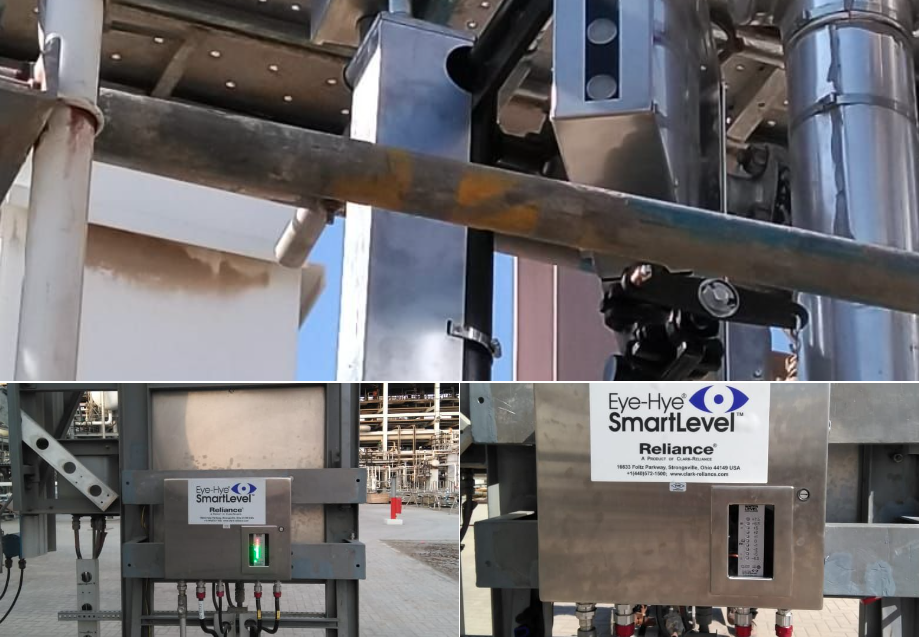
Shipping Reliance Probe Type Water Columns to a Plant in Colombia
Updated: Aug 6
We recently shipped six Reliance Probe Type Water Columns to a plant in Colombia. Each water column plays a critical role in that facility's boiler level instrumentation — here's what these components do and why they matter.
What Is a Water Column?
A water column is a vertical vessel mounted external to the boiler, connected to the steam drum via piping. Rather than sensing level itself, it serves as a stable mounting platform where gage glasses, switches, and alarm devices connect to the boiler's water and steam system.
Three Purposes of a Water Column
1. Supporting Water Gage Glasses A water column can support one or two water gage glasses, providing proper isolation and drain valve connections so the direct-reading gage required by ASME code connects safely to the boiler.
2. Float-Type High & Low Alarms Water columns can house float-type mechanisms that trigger high-water and low-water alarms as the water level inside the column rises and falls with the boiler's actual level.
3. Probe-Type for Alarms and Low-Water Cutout The units shipped to Colombia are probe type — using electrical conductivity probes to detect water presence at specific elevations. This triggers alarms or low-water cutout if level drops to a dangerous point, without relying on any moving mechanical parts inside the column.
Why Probe-Type for This Application
Probe-type water columns are often preferred for low-water cutout functions specifically because they have no moving parts inside the column. A float-type system relies on mechanical actuation, which introduces a potential point of binding or failure at exactly the moment a safety cutout needs to work reliably. Probe-type sensing avoids that failure mode.
ASME Code Status
Water columns are not required on power boilers by ASME Boiler Code — a boiler can be designed with direct connections for gage glasses and alarms instead. However, when a water column is specified, as it was for this Colombia installation, it must be designed and manufactured to comply with the Code. Water columns are considered a Standard Pressure Part as defined in PG-11 of the ASME Boiler Code, meaning they're held to the same material and manufacturing standards as other pressure-retaining boiler components.
Why This Matters for This Shipment
Six water columns headed to a single facility suggests a multi-boiler installation or a plant standardizing its instrumentation approach across several units. Using probe-type water columns consistently across multiple boilers gives the plant a uniform, reliable low-water protection strategy without introducing the mechanical variability that comes with float-based alarm systems.
Applications
Probe-type water columns like these are common across:
Power Generation: Multi-boiler facilities standardizing safety instrumentation
Industrial Steam Systems: Centralized level alarm and cutout protection
Pulp & Paper: Process and power boiler installations requiring reliable low-water protection
Learn More
For guidance on specifying probe-type or float-type water columns for your boiler application, view our product brochure for Cast Iron & Steel Water Columns or contact Clark-Reliance's technical team directly.
📧 sales@clark-reliance.com📞 +1 (440) 572-1500