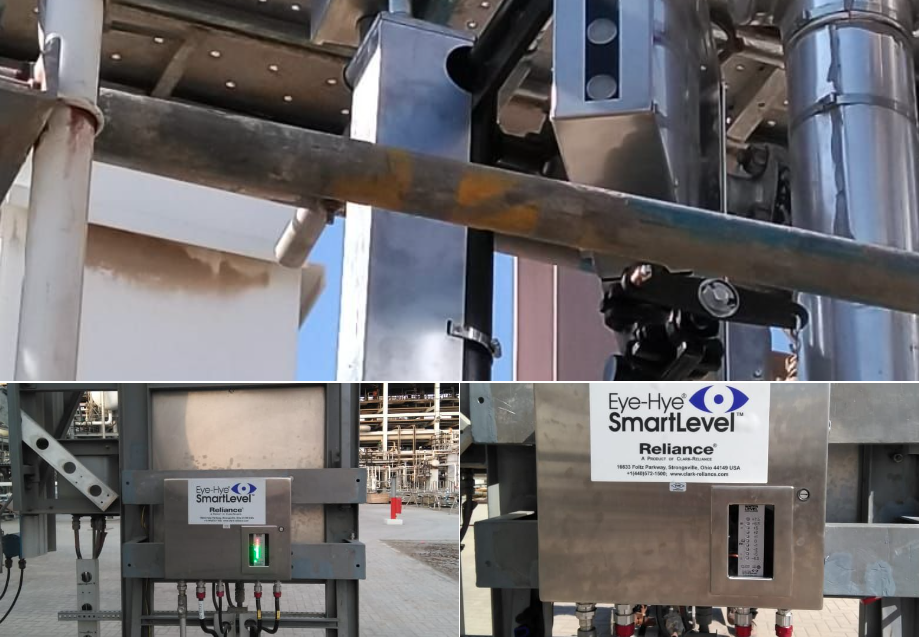
Having Trouble Seeing the Water Level in Your Boiler? The Simpliport® 180 Solution
Updated: Aug 6
Visibility of boiler water level is critical for safe, efficient operation. But poor sightlines, inadequate lighting, or existing gage designs can make water level hard to see — forcing operators to spend more time at the boiler or risk misreading levels. The Simpliport® 180 Wide-Angle Viewing System solves this problem with industry-leading 180-degree visibility.
The Problem: Limited Visibility & Operator Exposure
Why Visibility Matters
Safe boiler operation depends on operators being able to quickly and accurately see water level. But many facilities face visibility challenges:
Poor Lighting: Boiler rooms are often dark, making traditional gages hard to read
Limited Sightlines: Operators can only see the gage from certain angles
Operator Exposure: Operators must stand very close to the boiler in hot, potentially hazardous conditions
Misreadings: Poor visibility leads to operators misinterpreting water level
Downtime: When operators can't see level clearly, they hesitate to start/stop the boiler
According to ASME Code, you must have a direct-reading gage glass as your primary level indication. But that doesn't mean visibility has to be poor.
The Simpliport® 180: 180-Degree Viewing
The Simpliport 180 is specifically designed to solve visibility problems without replacing your entire gage system. Here's how it works:
Wide-Angle Optics
Visible from anywhere within a 180-degree arc in front of the gage
Operators can read level from across the control room, not just directly in front
Bright LED illumination cuts through darkness and poor lighting
Red/green indicator provides high-contrast visibility (red = steam, green = water)
What This Means Practically:
Operator standing 6 feet away can see level clearly
Operator standing 30 feet away can see level clearly
Operator standing at an angle can see level clearly
No more "standing directly in front and squinting" required
Simpliport 180 vs. Standard Glass Gages
Standard Direct-Reading Glass Gage:
Requires operator to stand directly in front
Visibility range: ~30-45 degree arc
Relies on ambient lighting (difficult in dark areas)
ASME compliant
Inexpensive
Limited operator flexibility
Simpliport® 180 Wide-Angle System:
Visible from anywhere in 180-degree arc
Visibility range: 180 degrees (6x wider)
LED illumination ensures visibility 24/7
ASME compliant (meets direct-reading requirement)
Higher upfront cost (~$8,000-$12,000 for new installation)
Significant operator safety and efficiency gains
Cost-Benefit Analysis:
One prevented misreading = ROI in 1-2 years
Reduced operator exposure = fewer safety incidents
Better visibility = faster startup procedures
LED service life = 10+ years (vs. 1-2 years for incandescent)
Simpliport 180 Component Breakdown
Stainless Steel Gage Body
Rated for high-pressure boiler service (up to 3000 PSI)
Type 304 or 316 stainless construction (corrosion resistant)
Direct-connection to boiler steam drum or water column
Repairable design (remillings available if seals wear)
LED Illuminator Assembly
Bi-color LED (red for steam, green for water)
100,000+ hour service life (~11+ years continuous)
Minimal power consumption
No heat generation (unlike incandescent lamps)
Sealed against moisture and vibration
Wide-Angle Optics Viewing Hood
No moving parts, no service required
Optical lens design spreads light evenly across 180-degree arc
Works with fluid refraction principle (like traditional gages)
Bright indication visible in sunlight and darkness
Stainless steel or painted steel construction
ASME Compliance
The Simpliport 180 meets ASME Boiler & Pressure Vessel Code Section 1 requirements for direct-reading water level indication. It serves as your primary gage while you can also run electronic level sensors for remote monitoring and control — giving you both safety redundancy and operational automation.
Installation & Service
New Installation:
Installed at time of boiler construction
Integrated into water column assembly
Typical installation: 4-8 hours
Cost: $8,000-$12,000 complete system
Retrofit to Existing Gage:
Can be added to some existing systems
Requires compatibility assessment
Typical retrofit: 6-12 hours
Cost: $4,000-$8,000 depending on current equipment
Maintenance:
Annual LED inspection (visual check)
Quarterly blowdown procedure (prevents sediment buildup)
Occasional lens cleaning
No service parts for viewing hood
Who Benefits Most
Power Plants: Multiple units requiring consistent visibility
Food & Beverage: Process visibility while maintaining ASME compliance
Chemical Plants: Dark process areas requiring safe level observation
Paper Mills: Harsh environments where visibility is challenging
District Heating: Remote or outdoor boiler installations
Industrial Steam: Any facility where operator exposure is a concern