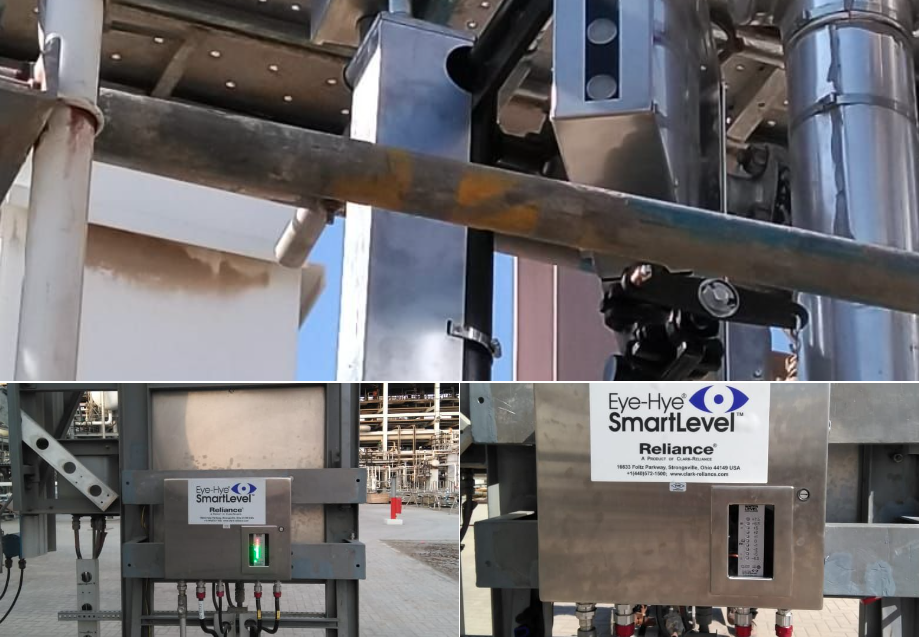
Direct & Indirect Level Indicators: Understanding ASME Section I Subsection PG-60
Updated: Aug 6
For anyone responsible for boiler safety and compliance, Subsection PG-60 of the ASME Boiler and Pressure Vessel Code (Section I) is one of the most important — and most frequently misunderstood — sections of the code. It governs how boiler water level must be indicated and monitored. Here's a breakdown of what PG-60 actually requires.
What Is Subsection PG-60?
Section I of the ASME Boiler Code is the construction code governing power boilers manufactured and designed to operate above 15 PSI. Subsection PG-60 specifically addresses water level indication requirements — the instrumentation operators rely on to know how much water is in the boiler at any given moment.
Getting this wrong isn't a minor compliance issue. Water level indication is the primary safeguard against catastrophic boiler failure from operating with too little water (tube burnout) or too much water (carryover damage).
The Basic Requirement: At Least One Gage Glass
PG-60.1 establishes the foundational rule: all boilers having a fixed water level (steam and water interface) shall have at least one gage glass — defined as a transparent device that permits visual determination of water level.
This is non-negotiable. A gage glass is the only type of level indicator ASME recognizes as "direct reading" — meaning the operator sees the actual water surface, not a translated or transmitted signal.
The Pressure-Based Requirement: One vs. Two Indicators
Boilers at or below 400 PSI (2.76 MPa):
At least one gage glass in service at all times
Boilers exceeding 400 PSI (2.76 MPa):
Two gage glasses are required, OR
One gage glass PLUS two independent remote water level indicators (two discrete systems that continuously measure, transmit, and display water level)
This second option is significant: at higher pressures, you can satisfy the code with one direct-reading gage glass and two indirect (remote) systems, provided the required gage glass — even if isolated for maintenance — is kept in serviceable condition.
Direct Reading vs. Indirect (Remote) Level Indication
Understanding this distinction is essential to correctly applying PG-60:
Direct Reading Indicators
A gage glass is the ONLY type of instrument ASME recognizes as direct reading. The operator visually confirms the actual water surface through a transparent medium. Nothing is translated, transmitted, or interpreted — you see the water itself.
Indirect (Remote) Level Indicators
Any level-sensing device that is externally mounted and relies on conductivity, signal detection and transmission, or magnetic sensing technology is considered an indirect (remote) type level indicator. This includes:
Magnetic level indicators (MLIs)
Electronic level transmitters
Differential pressure (DP) level sensors
Capacitance-based level sensors
Even though magnetic level indicators provide excellent visibility and reliability, ASME classifies them as indirect/remote — not a substitute for the required direct-reading gage glass.
Where Operators Cannot See the Gage Glass Directly
Modern boiler operators are typically stationed in a control room, often far from the boiler drum itself — meaning the gage glass is rarely within direct line of sight.
PG-60.1.1.1 addresses this: when the water level in at least one gage glass is not readily visible to the operator from the area where control actions are initiated, either fiber optic cable (with no electrical modification of the optical signal) or mirrors must be provided to transfer the optical image to the control area. Alternatively, a combination of remote indicating systems may be used to satisfy visibility requirements.
Isolation Valve & Drain Valve Requirements
PG-60.1.2 requires isolation valves and drain valves on level indication systems. This applies to both direct-reading gage glasses and magnetic/remote level indicators. These valves:
Allow safe isolation for maintenance without full system shutdown
Enable regular blowdown procedures (critical for removing sediment)
Provide emergency isolation capability if the instrument fails
Common Compliance Mistakes
Mistake 1: Treating an MLI as a Replacement for Gage Glass
A magnetic level gage does not replace the code-required gage glass — even though it may be highly reliable and provide excellent visibility. It's classified as indirect/remote and can supplement, but never replace, the direct-reading requirement.
Mistake 2: Using an MLI as a Water Column
A magnetic level gage may NOT function as a water column, and other accessories such as a gage glass are prohibited from being attached to it. Each instrument must maintain its independent installation.
Mistake 3: Attaching Control Functions to an MLI
External switches or transmitters attached to a magnetic level gage for control functions are prohibited under the code requirements governing these devices.
Mistake 4: Ignoring Visibility Requirements
If the gage glass isn't visible from the control area, and no fiber optic, mirror, or equivalent indication system is provided, the installation is non-compliant — regardless of how good the instrumentation itself is.
Why This Matters for Your Facility
Non-compliance with PG-60 can result in:
Failed boiler inspections
Insurance coverage issues
Operational shutdowns until corrected
Safety risk from inadequate level verification
When specifying new boiler instrumentation or upgrading existing systems, always verify PG-60 compliance with a qualified engineer or certified boiler inspector — code interpretations can evolve, and specific applications may have additional considerations.
Learn More
Clark-Reliance's boiler trim product specialists can help you navigate PG-60 requirements for your specific boiler application, whether you're specifying new equipment or evaluating an existing installation for compliance.
📧 sales@clark-reliance.com📞 +1 (440) 572-1500