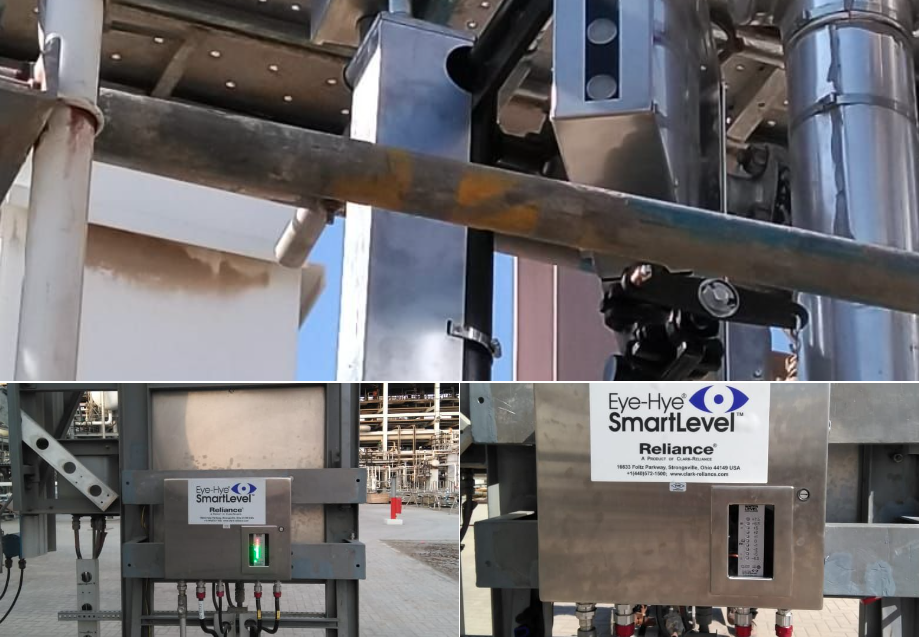
Top Mount Jerguson® SureTest™ Headed to an Oil & Gas Company in the Gulf Coast
Updated: Aug 10
The SureTest™ is a local, manual check feature for level switches. It allows the operator to simulate a high level in order to check the operation of the switch — without breaking the pressure boundary. A Top Mount Jerguson SureTest is headed to an oil and gas company in the Gulf Coast, where it will provide exactly this kind of on-demand switch verification.
Why Testing a Level Switch Is Normally a Problem

Level switches are safety-critical components, often tied to alarms or automatic shutdowns triggered by high or low liquid level. But confirming that a switch actually works — rather than assuming it will function correctly when needed — traditionally means physically raising or lowering the liquid level in the vessel to the switch's trip point, or opening the pressure boundary to manually actuate the switch mechanism.
Neither option is practical for routine testing. Deliberately changing process level just to test a switch disrupts normal operation. Opening the pressure boundary introduces safety risk and process downtime, and requires re-establishing containment afterward.
How SureTest Solves This
The SureTest housing is installed between the switch enclosure and the chamber or tank, achieved by extending the pressure tube and raising the position of the switch enclosure. This physical repositioning creates the space needed for a local, external mechanism that can simulate a high-level condition directly at the switch — triggering the same response the switch would have if the actual process level had risen to that point.
Why This Matters:
Because the simulated actuation happens externally, at the SureTest housing, the pressure boundary between the switch and the process fluid is never broken. The test confirms the switch mechanism itself is functioning correctly, without introducing any of the downtime, safety exposure, or containment concerns that come with traditional testing methods.
Why This Matters for Oil & Gas Applications
Level switches in oil and gas service are frequently tied to critical alarm and shutdown functions — protecting against overfill, dry-running pumps, or other hazardous conditions. Being able to verify these switches are functioning correctly on a routine basis, without disrupting production or opening a pressure boundary on a live system, is valuable specifically because it makes regular testing practical rather than something reserved for scheduled shutdowns.
Top Mount Configuration
This particular installation uses a top-mount configuration, meaning the switch assembly connects at the top of the vessel or chamber rather than a side-mount arrangement. Top mount configurations are common where vessel geometry, connection availability, or application requirements favor accessing level indication from above rather than from the side.
Applications
SureTest local switch verification is valuable across:
Oil & Gas: Separator vessels, storage tanks, and process equipment relying on level switch alarms
Chemical Processing: High/low level alarms on reactors and storage vessels
Power Generation: Level switches on feedwater tanks, condensate receivers, and similar applications
Any Application Requiring Routine Switch Verification: Without the downtime or safety exposure of traditional testing methods
Learn More
For guidance on specifying a Jerguson SureTest housing for your level switch application, contact our Jerguson team.
Email: sales@clark-reliance.com Phone: +1 (440) 572-1500
Related Products & Resources: